
Dryer Takes Forever to Dry? The #1 Cause Is Your Vent Hookup
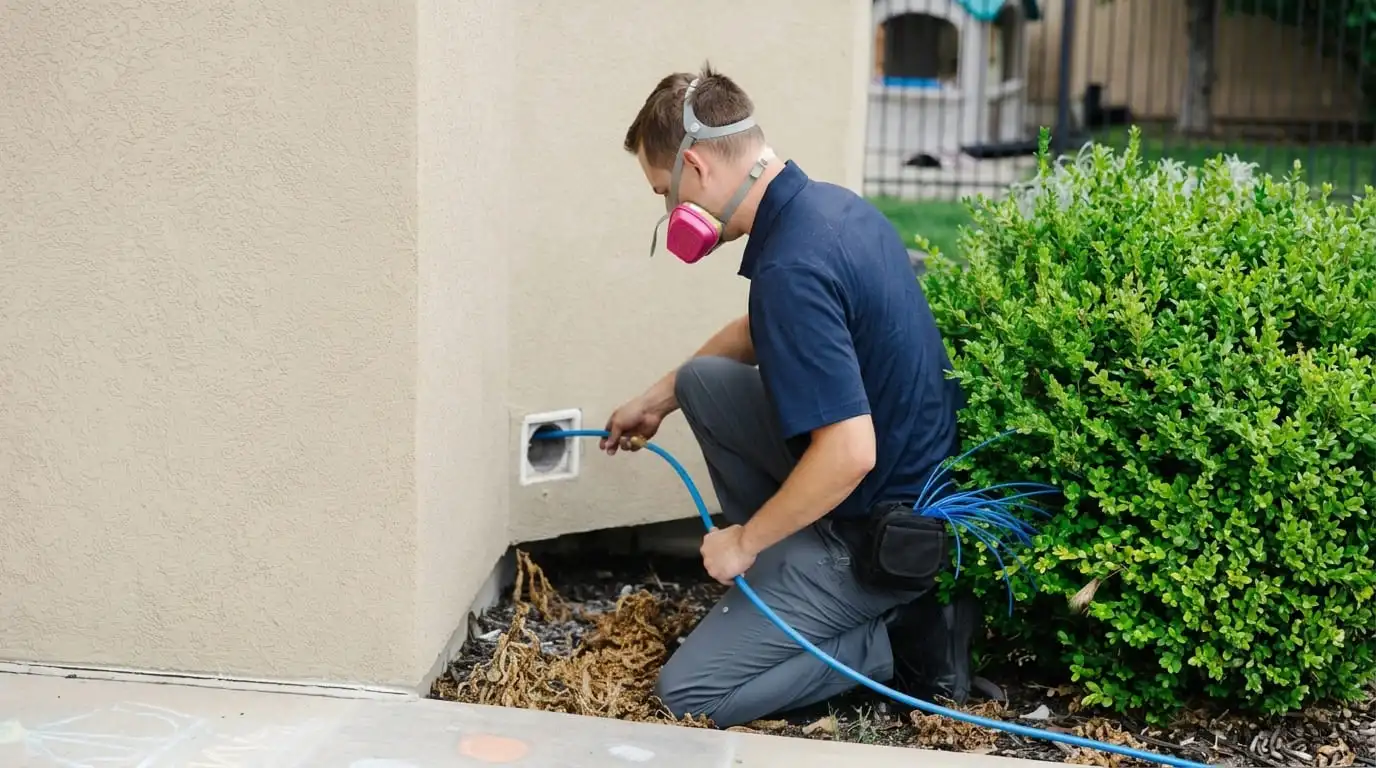
If your dryer needs two or three cycles to dry one normal load, the dryer itself may not be the first problem.
In many homes, the real issue is behind the machine: a clogged vent, crushed hose, long duct run, blocked outside flap, or poor hookup that restricts airflow.
A dryer needs heat, tumbling, and strong airflow. When the vent is blocked or installed wrong, hot moist air cannot leave the dryer fast enough. Clothes stay damp, the dryer runs hotter, and parts start wearing out faster.
That is why replacing a heating element, thermal fuse, or thermostat without checking the vent often does not solve the problem. The failed part may be the symptom. Restricted airflow is often the cause.
- The most common reason clothes take too long to dry is poor airflow.
- Dryer vent problems include lint buildup, crushed ducts, blocked exterior vents, long vent runs, and unsafe flexible hose.
- A clogged or restricted vent can make the dryer overheat and may create a fire risk.
- Plastic or thin foil vent material should not be used for a safe dryer hookup.
- If the dryer is hot, smells like burning, shows airflow error codes, or needs multiple cycles, stop ignoring it and have the vent and hookup checked.
- How Long Should a Dryer Take to Dry Clothes?
- Warning Signs of a Dryer Vent Problem
- Why Restricted Airflow Makes Clothes Dry Slowly
- Common Dryer Vent and Hookup Problems
- How a Bad Vent Can Damage Dryer Parts
- When the Problem Is Not the Dryer Vent
- What a Safe Dryer Vent Hookup Should Look Like
- Dryer Vent Material Comparison
- DIY vs. Professional Dryer Vent Service
- Dryer Vent Maintenance Checklist
- Dryer Vent and Hookup Service in Spokane
- FAQ
How Long Should a Dryer Take to Dry Clothes?
A normal dryer cycle usually takes about 30 to 60 minutes, depending on the load size, fabric type, washer spin speed, and dryer model.
Heavy towels, jeans, blankets, and large mixed loads can take longer. But if a normal load needs two or three full cycles, something is wrong.
| Load Type | Normal Drying Time | When to Check the Vent |
|---|---|---|
| Small mixed load | 25–40 minutes | If clothes are still damp after one full cycle |
| Normal cotton load | 35–60 minutes | If it regularly takes 90+ minutes |
| Towels or jeans | 50–80 minutes | If it takes multiple cycles every time |
| Blankets or bulky items | 60–90+ minutes | If the dryer is hot but the load stays wet |
The key is consistency. One heavy load taking longer is normal. Every load taking longer is not.
Warning Signs of a Dryer Vent Problem
Dryer vent problems usually show up before the dryer completely fails. The signs are easy to miss because the machine may still run.
The problem is that “running” is not the same as “drying correctly.”
| Symptom | What It Usually Means | Why It Matters |
|---|---|---|
| Clothes are still damp after one full cycle | Moist air is not leaving the dryer fast enough | The dryer has to run longer and uses more energy |
| Dryer feels very hot on the outside | Heat is trapped inside the machine | Overheating can damage parts and create a safety risk |
| Burning smell near the dryer | Lint may be overheating inside the dryer or vent path | Stop using the dryer until it is inspected |
| Lint collects around the dryer or outside vent | The vent may be leaking, blocked, or poorly connected | Lint buildup can restrict airflow and increase fire risk |
| Dryer shuts off mid-cycle | The dryer may be overheating and tripping a safety device | The vent and internal components should be checked |
| Airflow error code appears | The dryer detects restricted airflow | Common examples include AF, d80, d90, or d95 codes |
Why Restricted Airflow Makes Clothes Dry Slowly
A dryer removes moisture by heating air, moving that air through the drum, and pushing wet air out through the vent.
When the vent is clear, that hot moist air leaves the house. When the vent is restricted, moisture stays trapped longer. The dryer keeps tumbling, but the clothes do not dry properly.
This is why a dryer can feel hot and still leave clothes damp. Heat alone does not dry laundry efficiently. The moisture has to escape.
Quick DIY Airflow Check
You can do a simple airflow check without taking the dryer apart.
- Clean the lint screen.
- Turn the dryer on a heated cycle.
- Go outside to the dryer vent exit.
- Check whether the flap opens fully.
- Feel for strong, steady airflow.
- Look for lint buildup, a stuck flap, snow, leaves, or a pest screen.
| What You Notice | What It May Mean |
|---|---|
| Strong airflow outside | The vent may be clear, and the issue may be inside the dryer |
| Weak airflow outside | The vent may be clogged, crushed, too long, or disconnected |
| No airflow outside | The vent may be fully blocked or disconnected |
| Flap does not open | The vent cap may be stuck, clogged, frozen, or installed wrong |
| Dryer is hot but clothes stay damp | Moist air may not be leaving the dryer fast enough |
Common Dryer Vent and Hookup Problems
When we check dryers that take too long to dry, the issue is often not complicated. It is usually one of these problems.
1. Lint Buildup Inside the Vent
The lint screen catches a lot, but it does not catch everything. Over time, lint moves past the screen and builds up inside the vent system.
That buildup narrows the duct and slows airflow. The dryer then has to work harder to push moist air out.
2. Crushed Dryer Hose Behind the Machine
This is one of the most common hookup problems.
The dryer gets pushed too close to the wall, and the hose behind it folds, kinks, or crushes. From the front, everything looks fine. Behind the dryer, airflow is almost blocked.
If the dryer was recently moved, installed, replaced, or pushed back after cleaning, check the vent connection.
3. Unsafe Flexible Foil or Plastic Vent
Thin foil and plastic vent materials are easy to crush and can trap lint inside the ridges.
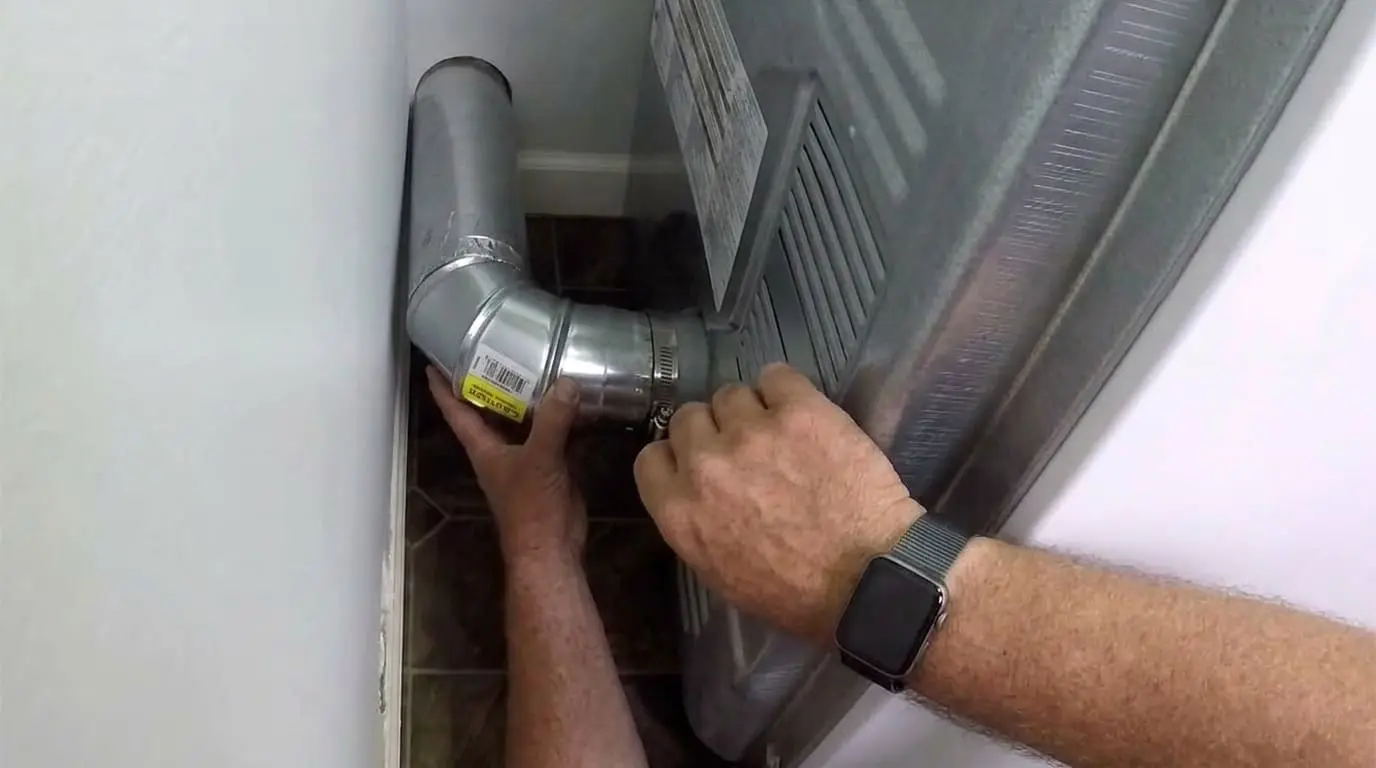
They may be cheap and easy to install, but they are not the best choice for safety or airflow. A proper dryer vent setup should use smooth metal ducting where possible and a short, listed transition duct behind the dryer.
4. Blocked Exterior Vent Cap
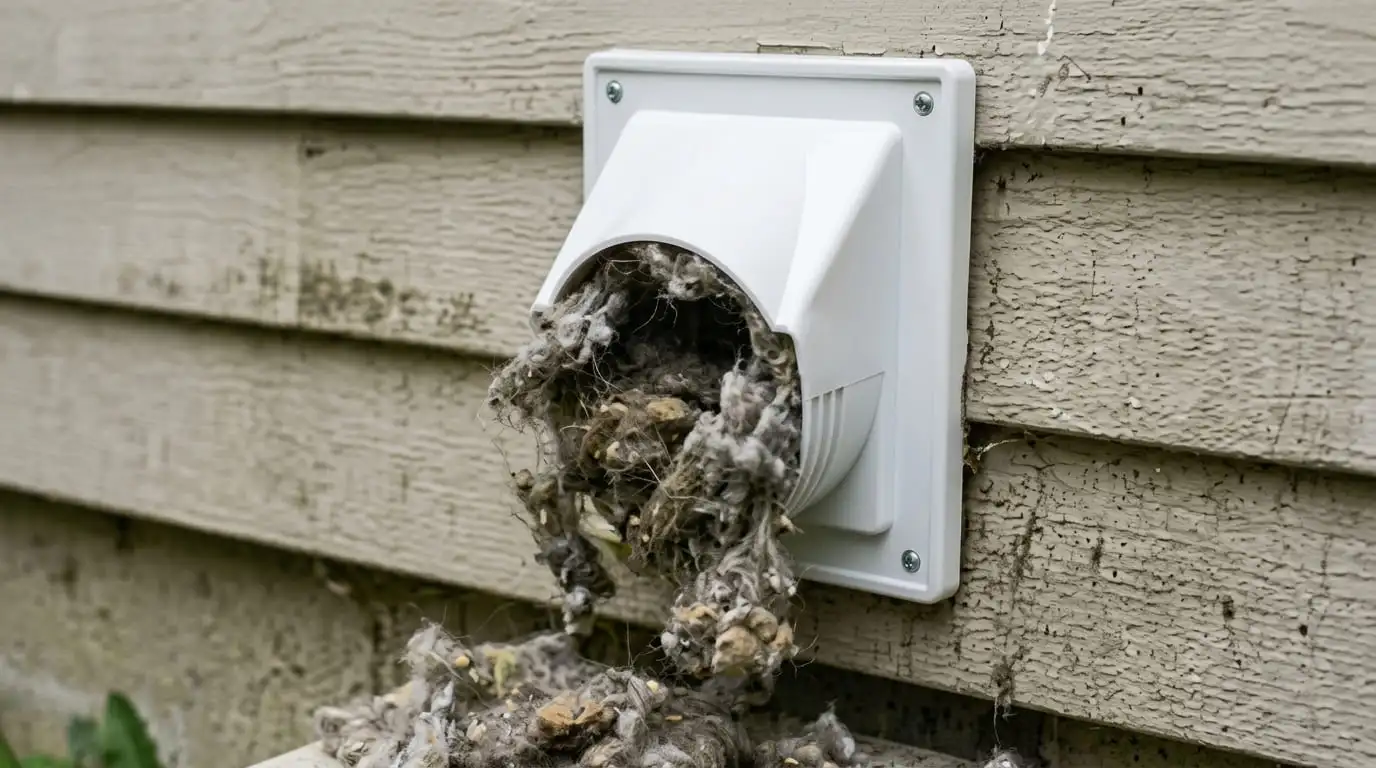
The outside vent can get blocked by lint, snow, leaves, bird nests, pest guards, or a stuck flap.
In colder areas, snow and ice can also block the vent during winter. If the dryer suddenly starts taking longer after a storm or cold weather, check the outside termination.
5. Screen Installed Over the Outside Vent
Some homeowners add a screen to keep pests out. That sounds reasonable, but screens catch lint quickly.
A lint-packed screen blocks airflow and can make the dryer overheat. A proper exterior vent should use a flap or backdraft damper that opens when the dryer runs and closes when it stops.
6. Vent Run Is Too Long or Has Too Many Bends
The longer the vent run, the harder it is for the dryer to move air. Every elbow adds resistance.
A short, straight vent is best. Long runs, multiple turns, roof exits, and hidden ducts need more careful planning and inspection.
How Long Can a Dryer Vent Be?
As a general rule, shorter is better. Many residential dryer vent systems are designed around a maximum developed length of about 35 feet, but elbows reduce that allowance.
A 90-degree bend can reduce the effective length by about 5 feet, and a 45-degree bend can reduce it by about 2.5 feet. Dryer manufacturers may also set their own limits, so the installation manual matters.
| Vent Layout | Why It Matters |
|---|---|
| Short and straight | Best airflow and easiest to clean |
| One or two bends | Usually workable if the run is not too long |
| Multiple bends | More resistance and more places for lint to collect |
| Roof exit or long hidden run | Needs careful inspection and cleaning access |
| Crushed transition duct | Can restrict airflow even if the main vent is short |
If your laundry room is far from an exterior wall, or the vent exits through the roof, weak airflow should be taken seriously.
7. Disconnected or Leaking Vent
If the vent is loose behind the dryer or disconnected inside a wall, crawlspace, or attic, moist lint-filled air may be going into the home instead of outside.
That can cause lint buildup, moisture problems, odor, and poor dryer performance.
How a Bad Vent Can Damage Dryer Parts
A restricted dryer vent does not just waste time. It can put stress on the machine.
When airflow is blocked, heat builds up inside the dryer. The dryer may cycle hotter than normal, shut down early, or blow a safety fuse.
Parts That Can Be Affected
- Thermal fuse: a safety device that can open when the dryer overheats.
- High-limit thermostat: helps protect the dryer from overheating.
- Heating element: can be stressed by poor airflow and repeated overheating.
- Blower wheel: moves air through the dryer and vent system.
- Moisture sensor: may not read drying correctly if airflow is poor or laundry stays damp too long.
- Control board: may show airflow-related error codes depending on the model.
When the Problem Is Not the Dryer Vent
A restricted vent is one of the most common causes of long dry times, but it is not the only one. Sometimes the dryer itself has a separate failure.
| Possible Dryer Problem | Common Signs | What It Means |
|---|---|---|
| Weak or failed heating element | Dryer tumbles but produces little or no heat | The dryer may need electrical testing and part replacement |
| Bad thermal fuse | Dryer may not heat or may not start, depending on the model | The fuse may have failed from overheating, so airflow still needs to be checked |
| Faulty cycling thermostat or thermistor | Temperature is inconsistent or the dryer overheats | The dryer may not regulate heat correctly |
| Worn blower wheel | Weak airflow even with a clear vent, rattling, or poor drying | The dryer may not be moving enough air through the drum |
| Moisture sensor issue | Auto-dry shuts off too early or runs too long | The sensor or sensor circuit may need cleaning or diagnosis |
| Overloaded washer or poor spin cycle | Clothes go into the dryer too wet | The washer may not be extracting enough water before drying |
This is why a proper diagnosis matters. The vent, heating system, blower, sensors, and washer spin performance all affect drying time.
What a Safe Dryer Vent Hookup Should Look Like
A safe dryer hookup is not just about making the dryer fit in the laundry room. It needs to move air properly and reduce lint buildup.
A Good Dryer Vent Setup Usually Has:
- a short and straight vent path whenever possible;
- smooth metal ducting instead of plastic or thin foil;
- a 4-inch duct size for proper airflow;
- joints sealed with foil tape, not regular duct tape;
- no screws sticking into the duct where lint can catch;
- a properly installed exterior vent cap with a working flap;
- no screen over the vent opening;
- enough space behind the dryer so the duct is not crushed;
- venting to the outdoors, not into an attic, crawlspace, garage, or wall cavity.
Dryer exhaust should leave the home. Venting a dryer indoors or into a hidden space can create moisture, lint, odor, and safety problems.
Dryer Vent Material Comparison
Not all dryer vent materials perform the same. Some are safer and easier to keep clean. Others create airflow problems from the beginning.
| Vent Material | Best Use | Pros | Problems |
|---|---|---|---|
| Rigid metal duct | Main vent run where space allows | Smooth airflow, durable, safer, easier to clean | Requires proper cutting, fitting, and planning |
| Semi-rigid metal duct | Short transition behind dryer | Better than foil, holds shape better, less likely to crush | Still should be kept short and installed carefully |
| Thin foil flexible duct | Not ideal for a permanent safe setup | Cheap and easy to bend | Crushes easily, traps lint, restricts airflow |
| Plastic or vinyl duct | Should not be used for dryer exhaust | Low cost | Unsafe, poor durability, lint and heat concerns |
DIY vs. Professional Dryer Vent Service
Some dryer vent maintenance is safe for a homeowner. Some situations need a technician.
DIY May Be Reasonable When:
- the vent is short and easy to access;
- the outside vent is visible and reachable;
- you are only cleaning the lint screen, lint trap housing, or exterior flap;
- the dryer is not showing burning smells, overheating, or repeated fuse failures;
- you are not moving gas lines, electrical wiring, or hidden ductwork.
Call a Professional When:
- the dryer takes two or more cycles to dry;
- you smell burning;
- the dryer gets very hot;
- the dryer shuts off mid-cycle;
- the vent goes through a wall, ceiling, roof, attic, crawlspace, or long run;
- the vent hose is crushed or disconnected behind the dryer;
- you see airflow error codes such as AF, d80, d90, or d95;
- a thermal fuse or heating part failed and the vent was never checked;
- you are not sure whether the hookup is safe.
Dryer Vent Maintenance Checklist
Dryer vent problems are easier to prevent than repair. A few simple habits can help your dryer run safer and more efficiently.
| How Often | What to Do | Why It Helps |
|---|---|---|
| After every load | Clean the lint screen | Improves airflow and drying performance |
| Monthly | Check the exterior vent flap | Makes sure air is exiting the home |
| Monthly | Look behind the dryer | Catches crushed or disconnected vent hose |
| Every few months | Vacuum around the lint trap housing | Reduces lint buildup around the dryer |
| Once a year | Have the vent inspected or cleaned if needed | Helps prevent long dry times and overheating |
| Any time performance changes | Check airflow before replacing parts | Prevents unnecessary repairs |
Dryer Vent and Hookup Service in Spokane
In Spokane and surrounding areas, we often see dryer problems caused by older laundry rooms, tight wall clearances, long vent runs, basement laundry setups, roof exits, crushed transition ducts, and vents blocked by lint or weather.
At IV Appliance Clinic, we check the dryer and the vent path before jumping to part replacement. If the machine is overheating, taking too long to dry, showing an airflow code, or repeatedly blowing a thermal fuse, the vent hookup needs to be part of the diagnosis.
We service dryers and appliance hookups in Spokane, Spokane Valley, Liberty Lake, Cheney, Airway Heights, Post Falls, and nearby areas.
My name is on the company, and I take that seriously. If the dryer needs a repair, we will tell you. If the real issue is the vent or hookup, we will tell you that too.
If you are not sure whether the problem is the dryer, the vent, or the hookup, we can check the full system and give you a straight answer before replacing parts.
If your dryer takes forever to dry, overheats, smells like burning, or keeps showing airflow problems,
schedule dryer repair service,
request appliance installation help,
or call
+1 (253) 378-75-49.
Ivan Vynychenko is the owner of IV Appliance Clinic, a licensed and insured appliance repair and installation company serving Spokane County, WA and Post Falls, ID. Ivan works directly with homeowners, landlords, property managers, and local businesses to diagnose appliance problems, complete proper repairs, and help customers make practical decisions about repair, replacement, and installation.
FAQ
Why does my dryer take so long to dry clothes?
The most common reason is restricted airflow. A clogged vent, crushed hose, blocked outside vent, or poor dryer hookup can trap moist air inside the dryer and make clothes take much longer to dry.
How long should a dryer take to dry clothes?
Most normal loads dry in about 30 to 60 minutes. Heavy towels, jeans, blankets, and bulky loads may take longer. If regular loads need two or three cycles, the dryer or vent system should be checked.
How do I know if my dryer vent is clogged?
Common signs include long dry times, damp clothes after a full cycle, weak airflow outside, a hot dryer, burning smell, lint around the vent, or airflow error codes.
Can I check dryer airflow myself?
Yes, you can clean the lint screen, run the dryer, and check the outside vent for strong airflow. If the airflow is weak, the flap does not open, or the dryer has to be moved or opened, call a technician.
Can a clogged dryer vent cause the dryer to overheat?
Yes. When hot air cannot leave the dryer properly, heat builds up inside the machine. That can trip safety devices, damage parts, and increase fire risk.
Is it safe to keep using the dryer if I smell burning?
No. Stop using the dryer and have it inspected. A burning smell can come from overheated lint, electrical problems, a failing component, or restricted airflow.
How long can a dryer vent be?
Shorter is better. Many residential dryer vent systems are designed around a maximum developed length of about 35 feet, but bends reduce that allowance. Always check the dryer manufacturer’s installation instructions.
Can I use flexible foil duct for my dryer vent?
Thin foil duct is not the best choice for a safe long-term setup because it crushes easily and traps lint. Rigid metal duct or properly installed semi-rigid metal transition duct is usually a better option.
Should there be a screen on the outside dryer vent?
No. Screens can catch lint and block airflow. A proper exterior vent should have a flap or damper that opens when the dryer runs and closes when it stops.
How often should a dryer vent be cleaned?
Clean the lint screen after every load and check the outside vent regularly. Many homes benefit from annual inspection or cleaning, especially if the vent run is long or the dryer is used often.
Why did my thermal fuse blow?
A thermal fuse often blows because the dryer overheated. Restricted airflow from a clogged vent or poor hookup is one of the first things that should be checked before replacing parts.
When is the problem not the dryer vent?
If airflow is strong but the dryer still does not heat, shuts off incorrectly, makes unusual noises, or leaves clothes wet, the problem may be a heating element, thermostat, thermistor, blower wheel, moisture sensor, or washer spin issue.
Can a dryer vent problem cause error codes?
Yes. Some dryers show airflow-related codes when the machine detects poor venting. Depending on the brand, these may include codes such as AF, d80, d90, or d95.
Do you service dryer vent and hookup problems in Spokane?
Yes. IV Appliance Clinic helps with dryer repair, airflow problems, vent hookup issues, and appliance installation concerns in Spokane, Spokane Valley, Liberty Lake, Cheney, Airway Heights, Post Falls, and nearby areas.